
"cold-resistant coffee"
200 article(s) found
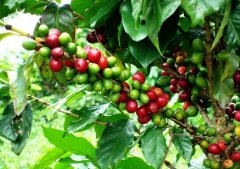
Cold-resistant single plant found in Yunnan coffee-- there is a new hope for cold-resistant breeding
The coffee producing area of Yunnan Province is mainly located in the tropical and subtropical area between the north of Indo-China Peninsula and the south of Yunnan Province, with a continental climate on the northern margin of the tropics.

Colombia coffee beans grinding scale varieties taste estate treatment introduction
Colombia coffee beans grinding scale varieties taste estate treatment method in Colombia coffee species have to mention Arabica species (scientific name Coffee Arabica). Arabica coffee trees grow more at altitudes of 900 meters to 2000 meters; cold-resistant, suitable growth temperature is 1524℃; need greater humidity, annual rainfall is not less than 1500 ml, at the same time,

Classification and characteristics of Coffee varieties with large Grain
Coffee varieties advantages and disadvantages large-grain coffee classification varieties and characteristics, also known as Liberian species, is an evergreen tree. The plant is tall, more than 10 meters high, the branches are thick and hard, grow obliquely upward, and the branches cork the fastest. The leaf blade is oval or round, the leathery leaf surface is glossy, the leaf end is closed, and the leaf margin is not corrugated. The fruit is large, oblong, the skin and pulp are hard and thick, the navel is large and protruding. Fresh fruit and dried fruit

The cultivated varieties of Coffee Tree: small seed and large seed
3. Cultivated varieties (1) small seed species (2) large grain species Coffea belongs to Rubiaceae, Coffea belongs to perennial evergreen shrubs or small trees, there are about 90 species. At present, there are small seed species (Arabian species), medium grain species (Gaffra species) and large grain species (Liberian species) cultivated in Hainan. (1) small seed species: also known as Arabian species, native to Ethiopia, evergreen shrubs. The plant is small, 4cm high and 5m high

Description of Arabica Coffee Flavor of Highland Coffee beans introduction to the taste of varieties treated by grinding degree
Studies on planting distribution have proved that Arabica is very sensitive to environmental changes and can survive only in a very narrow temperature range. Arabica coffee trees grow between 900m and 2000 m above sea level; they are cold-resistant, and the suitable growth temperature is 1524 ℃; they need more humidity, annual rainfall is not less than 1500 ml, and higher cultivation techniques and conditions are required.

The growth experience of coffee
Coffee seedlings do not blossom until about 5 years. Coffee begins to wither after flowering for 2-3 days. Green fruit gradually turns yellow after a few months. In June-September, it begins to turn red. There are roughly three varieties of coffee grown on a large scale: Arabica, also known as Arabica, which accounts for about 70% of the world's coffee acreage. The bean shape is slender, with an S-shaped line in the middle, and is native to

COE Champion Manor Colombia Spring Manor Fine Coffee Bean Varieties Planting Market Price Profile
Colombia coffee species have to mention Arabica species (scientific name Coffee Arabica). Arabica coffee trees grow at an altitude of 900 meters to 2000 meters; cold-resistant, suitable growth temperature is 1524℃; larger humidity, annual rainfall of not less than 1500 ml, at the same time, cultivation techniques and conditions also require higher requirements. So now you can understand

Coffee botany knowledge
The botanical description of coffee is: "Coffee is Rubiaceae, coffee, evergreen shrubs or small trees."
Conditions for growing coffee trees
Coffee cannot be grown in any environment, because it is originally a tropical rainforest plant, and in the development of the system, it develops habits that require calm wind, warm, shade or semi-shade and humid environments. We call the strip of area on both sides of the equator, between 25 degrees north and south latitude, suitable for the growth of coffee trees coffee belt.

Growing conditions of coffee
Coffee can not be grown in any environment, because it is originally a plant growing in a tropical rain forest. In systematic development, coffee forms the habit of calm wind, cool, shaded or semi-shaded and humid environment.
Knowledge of coffee botany
There are more than 60 kinds of coffee, but there are roughly two varieties of coffee grown commercially on a large scale, one is Arabica, accounting for about 70 percent of the world's coffee planting area, and the other is Robasta, accounting for about 30 percent of the world's coffee planting area.
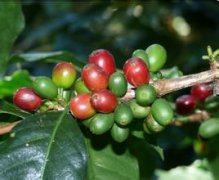
Coffee cultivation requirements for the environment
Coffee cannot be grown in any environment, because it is originally a tropical rainforest plant, and in the development of the system, it develops habits that require calm wind, warm, shade or semi-shade and humid environments. Therefore, coffee has strict requirements for planting conditions. We call the strip of area on both sides of the equator, between 25 degrees north and south latitude, suitable for coffee growth, coffee belt.
Classification of coffee according to Chinese national standards
According to our national standards, the classification of coffee is mainly divided into the following five varieties.

Classification of Coffee in Chinese National Standard
There are more than 60 kinds of coffee, but there are roughly two varieties of coffee grown commercially on a large scale, one is Arabica, accounting for about 70 percent of the world's coffee planting area, and the other is Robasta, accounting for about 30 percent of the world's coffee planting area.

The planting environment and natural climate of coffee trees
Coffee belt: coffee can not be grown in any environment, because it is originally a plant growing in a tropical rain forest, and in phylogeny, it forms the habit of requiring calm wind, cool, shaded or semi-shaded and humid environment. We call the strips on both sides of the equator between latitudes 25 degrees south and north suitable for the growth of coffee trees as coffee belts. Temperature: the requirement for temperature varies with the species of cultivation, small

The process of planting coffee beans in Colombia
Following Cafe Review (Wechat official account vdailycom) found that Beautiful Caf é opened its own shop Colombia is the world's third largest coffee producer and exporter, the world's largest exporter of Arabica coffee beans and the world's largest exporter of washed coffee beans. The unique geographical environment makes Colombia coffee, with beautiful mountains and rivers, beautiful scenery and climate.
Basic knowledge of boutique coffee conditions for planting coffee trees
Coffee belt: coffee can not be grown in any environment, because it is originally a plant growing in a tropical rain forest, and in phylogeny, it forms the habit of requiring calm wind, cool, shaded or semi-shaded and humid environment. We call the strips on both sides of the equator between latitudes 25 degrees south and north suitable for the growth of coffee trees as coffee belts. Temperature: the requirement for temperature varies with the species of cultivation, small
Botanical knowledge of coffee
There are more than 60 kinds of coffee, but there are roughly two varieties of coffee grown commercially on a large scale, one is Arabica, accounting for about 70 percent of the world's coffee planting area, and the other is Robasta, accounting for about 30 percent of the world's coffee planting area.
Basic knowledge of coffee conditions for planting coffee trees
Coffee belt: coffee can not be grown in any environment, because it is originally a plant growing in a tropical rain forest, and in phylogeny, it forms the habit of requiring calm wind, cool, shaded or semi-shaded and humid environment. We call the strips on both sides of the equator between latitudes 25 degrees south and north suitable for the growth of coffee trees as coffee belts. Temperature: the requirement for temperature varies with the species of cultivation, small
The hometown of coffee
According to the study of the origin of coffee, it is agreed that the earliest place of origin of coffee should be Ethiopia in Africa (ancient Abyssinia), which has produced magical fruits that have affected the world to this day.